
Laboratory
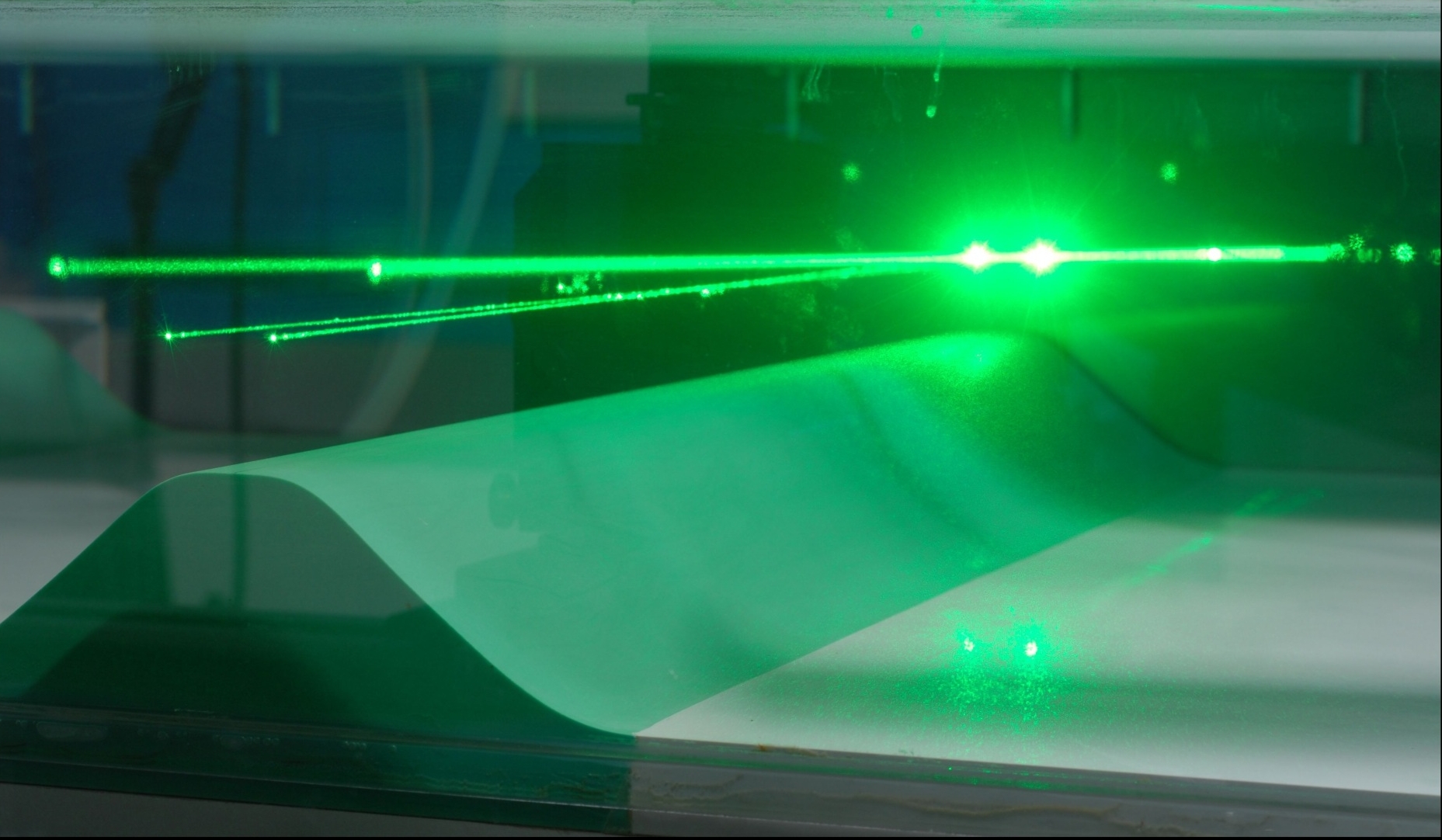
The Professorship of Hydromechanics runs a large (approximately 1000 square metres) laboratory facility, able to cater to extensive and large-scale investigations. The on-site pumps are able to provide discharges in excess of 300 L/s. In conjunction we operate a workshop with substantial timber, metal and synthetic material finishing, fine mechanics and electronics facilities. Staffed with experienced technicians, it provides excellent support to our range of fluid mechanics experiments. Please refer to our Consulting page for a number of examples.
The laboratory is ideally suited to investigations ranging from fundamental turbulence to applied hydraulics.
Measurement devices:
The following lists provides a non-comprehensive inventory of our laboratory equipment:
- 3 Component Particle Image Velocimetry (PIV) units
- 2 Component Laser Doppler Velocimetry (LDV) units
- 3 Component Acoustic Doppler Velocimetry (ADV) units
- Magneto-inductive discharge measurement devices
- Hydrometric propellers
- Highly sensitive pressure sensors
- Conductivity-meters
- Mobile magneto-inductive measurement devices
Student Projects:
At the Hydromechanics Laboratory of TUM, students have the opportunity to deepen their understanding of course content through physical model experiments. The available flumes allow students to conduct applied experiments and investigations.
Project Eisbachwelle:
In his thesis, Benjamin Müller-Artelt investigated the effects of different roughness elements on the wave shapes of the Eisbach wave. To this end, various roughness structures were installed on the ramp of the bed drop.
As can be seen in the pictures below, lower roughness produces white, foamy waves, while greater roughness results in green, hump-shaped waves. In addition to surface roughness, the inflow and outflow rates are key factors in determining the waveform.


